.png)
February 16, 2026
Fintech Marketing Trends 2026: Less Hype, More Reality from BrainStation
Fintech Marketing in 2026: Less Hype, More Reality
Last week I attended Leaders in Fintech: 2026 Trends & Landscape, hosted by BrainStation.
What stood out immediately was how different the conversation felt this year. There was less focus on big, shiny ideas and more emphasis on what is actually being delivered.
For those working in fintech marketing and growth, this shift feels important.
The industry is moving beyond experimentation and into a phase where measurable impact, customer adoption and commercial outcomes matter most.
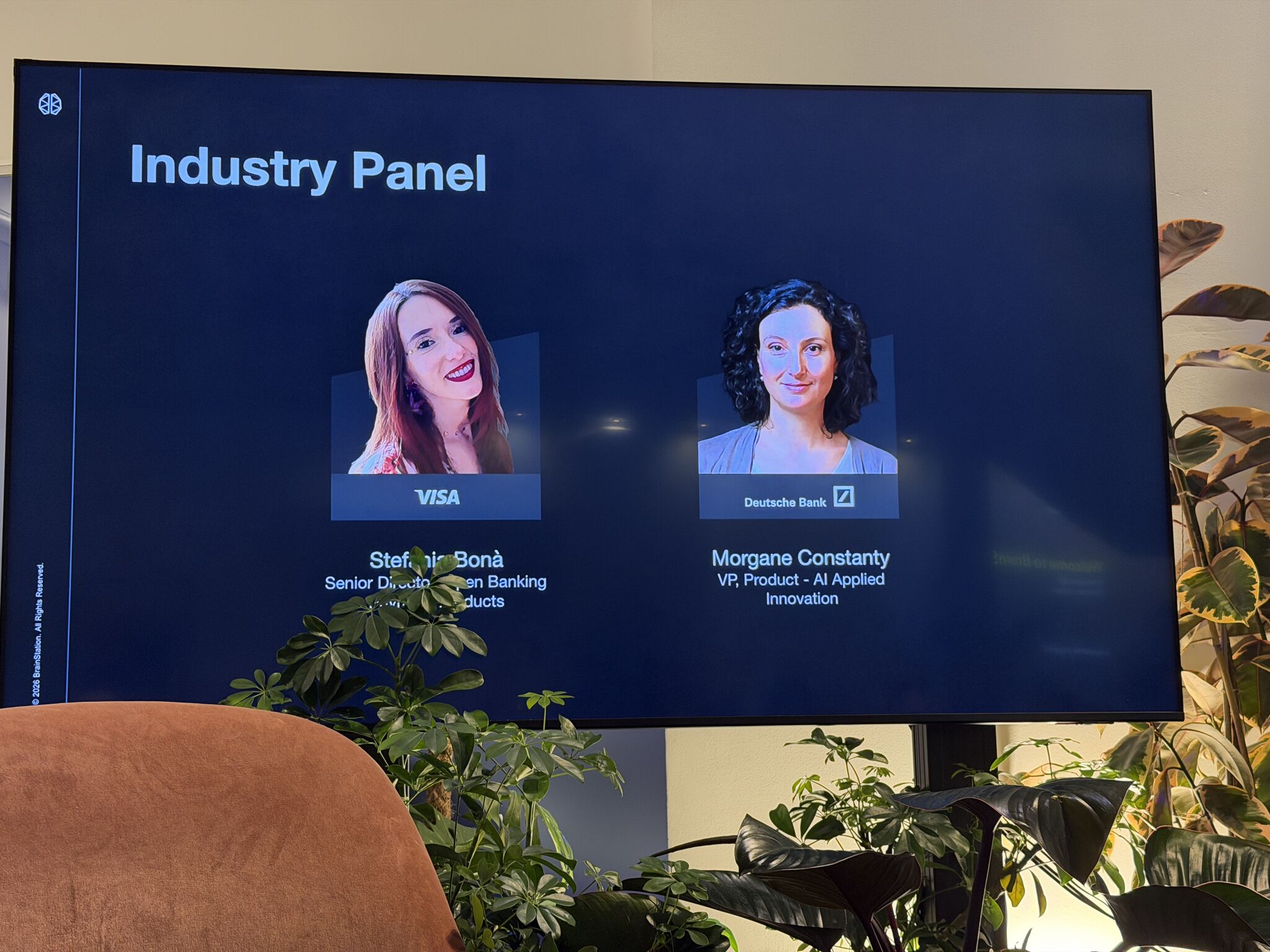
Who Was on the Panel
The session brought together two strong perspectives from product and innovation:
- Stefania Bonà, Senior Director of Open Banking Payment Products at Visa
- Morgane Constanty, VP Product for AI Applied Innovation at Deutsche Bank
Both offered grounded, practical views on how innovation is being applied in financial services today, with clear implications for fintech marketing strategy and growth teams.
GenAI Is Moving Into Production
One of the most consistent themes throughout the discussion was the shift from experimentation to execution.
Morgane shared examples of generative AI moving beyond pilot programmes and into live banking environments. This feels like a significant step forward for the industry.
For fintech marketing teams, this changes the conversation.
AI is no longer just a positioning tool or a narrative. It is becoming a real product capability that impacts customer experience, acquisition and retention.
Experimentation is important, but it is only when customers engage with a product that real value is created.
AI Should Support Humans, Not Replace Them
One line that really stood out:
“You are a bank, not an AI company.”
It’s a simple point, but an important one.
For fintech marketing and growth teams, this is a reminder that AI should not become the headline. Instead, it should support the core value proposition.
Used well, AI can:
• Improve customer experience
• Streamline internal processes
• Enable more personalised engagement
• Free up teams to focus on higher-value work
The opportunity is not to replace human interaction, but to enhance it.
Open Banking and Embedded Finance Continue to Evolve
Stefania highlighted how open banking is unlocking new use cases when data is shared responsibly.
One example was identity verification using banking data, enabling faster and more accurate decision-making.
For fintech marketing and growth teams, this creates new opportunities:
• Smoother onboarding journeys
• Reduced friction in conversion
• Stronger trust signals
• More personalised experiences
However, the balance between innovation and trust remains critical. Regulation, security and transparency are key to long-term success.
Agentic Commerce: Interesting, But Early
The concept of agentic commerce, where AI agents act on behalf of users, is gaining attention.
From a fintech marketing perspective, this could reshape how products are discovered, compared and purchased.
However, there are still important challenges to address:
- Understanding user intent
- Ensuring security and control
- Maintaining transparency
- Designing intuitive user experiences
For now, this is an area where curiosity is ahead of clarity.
What This Means for Fintech Marketing and Growth
One of the clearest takeaways from the session is that fintech is entering a more mature phase.
For fintech marketing and growth teams, this means shifting focus towards:
• Execution over experimentation
• Measurable outcomes over activity
• Customer value over technology hype
• Clear positioning over complex narratives
The fintech companies that succeed will be those that can translate innovation into real, measurable growth.
The Value of Being in the Room
Beyond the panel itself, one of the biggest benefits of attending events like this is the opportunity to connect with others in the industry.
It was great to meet new people, exchange perspectives and catch up with former colleagues from Kroo Bank.
These conversations often provide just as much value as the sessions themselves, particularly when discussing shared challenges in fintech marketing and growth.
Final Thoughts
Fintech marketing in 2026 feels more grounded.
AI is moving into real-world applications. Open banking continues to evolve. New concepts like agentic commerce are emerging, but still developing.
The shift now is clear:
From hype to impact.
From ideas to execution.
For fintech marketing and growth leaders, the focus is no longer on keeping up with trends, but on delivering real, measurable results.
It will be interesting to see which of these trends truly deliver value over the next 12 months, and which remain part of the narrative.
If you’re a fintech scale-up looking to improve your marketing strategy or growth performance, it’s worth stepping back and assessing what is actually driving results.
A structured marketing audit is often the fastest way to identify where the biggest opportunities lie.
Contact us
Still not sure? Send us a message to get more information